Everything you need to know to launch, grow, and monetize your creative corner of the internet.
Understanding the Craft Blogging Niche
Craft blogging has exploded in popularity over the last decade, and honestly, it is easy to see why. People are craving creativity more than ever. They want inspiration, hands on projects, and ideas that help them slow down and make something meaningful with their own two hands.
Whether you love crocheting, Cricut projects, paper crafts, sewing, woodworking, embroidery, quilting, home décor, or DIY projects, there is an audience out there looking for exactly what you create.
And truthfully, if I were starting any type of blog today outside of Restored 316, it would absolutely be a craft blog.
When I am not running this business, you will usually find me crocheting something cozy, pulling out my Cricut for a new project idea, or designing shirt graphics just for fun. Creative bloggers have always had a special place in my heart because I truly understand the joy that comes from making something yourself and sharing it with others.
That is one of the reasons craft blogging is such an incredible niche. People are not just searching for information. They are searching for inspiration, connection, creativity, and encouragement.
Before you dive into starting your blog, it helps to understand what the craft blogging world looks like and where your own unique style fits into it.
What is a Craft Blog?
A craft blog is a website dedicated to sharing DIY tutorials, project ideas, creative inspiration, and tips related to handmade crafts or creative hobbies.
At its core, a craft blog is a place where you document your creative process and help others learn how to create alongside you. Most craft blog posts include step by step instructions, supply lists, beautiful photography, and personal insights that make readers feel connected to both you and your projects.
The best craft blogs do far more than just share tutorials. They create a space readers genuinely want to return to again and again. Over time, your blog becomes a community built around shared creativity, inspiration, and encouragement.
Think of your craft blog as both a resource and a gathering place.
Identifying Your Unique Niche
One of the biggest mistakes new craft bloggers make is trying to blog about everything all at once.
The internet is already full of broad craft blogs, which means it can be difficult to stand out if your content feels too general. One of the fastest ways to build a loyal audience is to become known for something specific.
Ask yourself:
- What type of craft am I most passionate about?
- Who am I creating content for?
- What style or aesthetic naturally shows up in my projects?
- What kinds of projects could I consistently create content around?
- What do people constantly ask me for help with?
For example, instead of creating a general craft blog, you might focus on beginner crochet tutorials, modern farmhouse DIY projects, Cricut shirt designs, seasonal home décor, embroidery for beginners, or handmade gifts.
The more clearly you define your niche, the easier it becomes to attract readers who feel like your content was created specifically for them.
Craft Blog Ideas to Help You Choose Your Niche
If you are struggling to narrow down your niche, here are a few craft blog ideas that perform especially well online:
- Crochet blogs
- Cricut craft blogs
- DIY home décor blogs
- Sewing blogs
- Knitting blogs
- Kids craft blogs
- Holiday craft blogs
- Printable and paper craft blogs
- Handmade gift blogs
- Farmhouse style DIY blogs
- Embroidery blogs
- Upcycling and thrift flip blogs
- Wedding craft blogs
- Craft organization blogs
- Etsy seller companion blogs
Remember, you do not have to stay boxed into one tiny category forever. Your niche can evolve over time as your audience grows and your interests expand. The goal in the beginning is simply to create enough clarity that people immediately understand what your blog is about.
Successful Craft Bloggers to Inspire You
One of the best ways to learn craft blogging is to study creators who are already doing it well.
Look at the blogs you personally love reading and ask yourself:
- What makes their content enjoyable to read?
- How do they photograph their projects?
- How do they structure tutorials?
- What keeps you scrolling?
- What makes their brand memorable?
For example, bloggers like Jennifer Maker have built incredible businesses by creating beginner friendly tutorials and consistently showing up for their audience.
On the more niche side, creators like Briana, who uses our Crafted Theme, have built a loyal audience by staying focused on a specific craft and creating content that deeply serves that audience.
As you study other blogs, remember that the goal is not to copy what someone else is doing. The goal is to understand what makes readers feel connected so you can begin developing your own style and voice over time.
Steps to Starting Your Craft Blog
Now that you have a clearer vision for your blog, it is time to actually build it.
This part can feel technical in the beginning, but I promise it is much more manageable than it looks. Let’s walk through it step by step.
Choosing the Right Platform to Start a Website
The platform you choose matters because it shapes everything from your design flexibility to how much control you have over your content and business long term.
For most serious bloggers, WordPress.org is still the best option. It gives you complete ownership over your website and allows you to fully customize your blog as it grows.
If your goal is to eventually turn your craft blog into a business, starting with WordPress sets you up for long term success from the very beginning.
You will also need website hosting, which is where your blog files live online.
How to Choose the Best Host for Your First Blog
Choosing the right hosting company is one of the most important decisions you will make when starting your blog.
Your host affects your website speed, security, backups, support experience, and overall reliability. While there are many hosting companies out there, we personally recommend BigScoots.
Their support team has consistently been one of the best we have worked with over the years, especially for bloggers who may not feel super confident with the technical side of things yet.
If you decide to use BigScoots for your blog, you can also use our coupon code 4DBQWKYNMG3V to save on your hosting purchase.
Once your hosting account is set up, installing WordPress is incredibly simple, and from there you can begin designing your blog and publishing content.
Choosing a Domain Name for Your Craft Blog
Your domain name is your blog’s online home, so you want it to feel memorable and aligned with your brand.
Try to keep your domain:
- Easy to spell
- Easy to remember
- Related to your niche or personality
- Short enough to type easily
Avoid making it overly complicated or trendy. You want something that can grow with your brand long term.
If possible, try to secure a .com domain since it is still the most recognizable and trusted extension online.
What Pages Does a Craft Blog Need?
When setting up your blog, there are a few important pages you should create early on.
About Page
Your About page helps readers connect with you personally. Share your story, what inspired you to start your blog, and what readers can expect from your content.
Start Here Page
A Start Here page is incredibly helpful for guiding brand new visitors through your best content and helping them quickly understand what your blog offers.
Contact Page
A Contact page allows readers, brands, and potential collaborators to easily get in touch with you.
Resource Page
A resources page can become one of the most valuable pages on your website over time. This is where you can share your favorite tools, craft supplies, software, blogging resources, and recommendations.
We also created an entire Crafted Resources page specifically for bloggers using the Crafted Theme so they can easily find recommended tools, plugins, tutorials, and setup guidance.
Email Freebie Page
One of the smartest things you can do early on is begin building your email list. Offering a free printable, guide, checklist, or template can help encourage readers to subscribe and stay connected with your content.
Selecting a Template for Your Craft Blog
Your website design matters a lot in the crafting world because your audience is naturally visual.
A clean and thoughtfully designed blog helps your tutorials, photography, and projects feel more polished and professional while also creating a better experience for your readers.
The Crafted Theme: Built for Craft Bloggers Like You
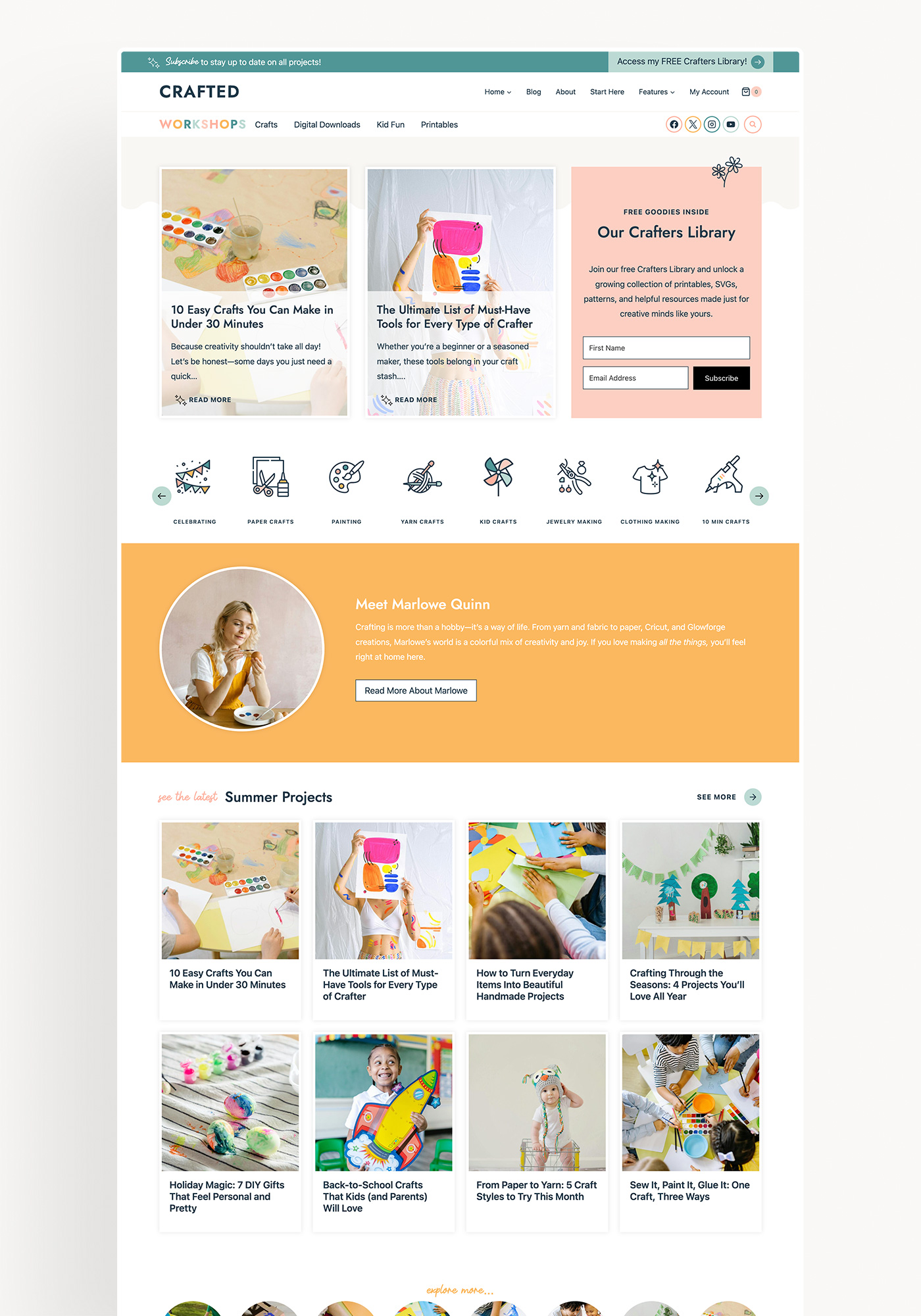
When we created the Crafted Theme, we specifically designed it with creative bloggers in mind.
Unlike generic WordPress themes that require endless customization, Crafted was intentionally designed to help makers showcase their creativity beautifully right from the start.
Whether you are sharing crochet tutorials, Cricut projects, DIY home décor ideas, sewing projects, or handmade gifts, Crafted helps your content feel polished, organized, and easy for readers to explore.
It includes beautiful layouts, image focused design elements, mobile responsive styling, and intuitive navigation that helps readers continue discovering your content.
One of the things we hear most often from bloggers is that they want their website to feel professional without needing to hire a developer or spend months trying to figure out complicated tech. Crafted was built specifically with that in mind.
And if you ever feel stuck or need support along the way, we also have an incredibly supportive Restored 316 Facebook Community where bloggers and business owners can ask questions, get feedback, and connect with other creators building online businesses.
Creating Compelling Blog Posts
Your blog is only as strong as the content you create. In the craft blogging world, that means combining beautiful visuals with genuinely helpful tutorials.
How to Take Photos that Showcase Your DIY Projects
You do not need expensive camera equipment to create beautiful photos.
Most modern smartphones are more than capable of taking stunning images when paired with good lighting and thoughtful styling.
Natural light is one of the best tools you can use. Try photographing your projects near windows during the daytime for soft, even lighting that highlights textures and colors beautifully.
Keep backgrounds simple and uncluttered so your projects remain the focus. Foam boards, wood surfaces, fabric backdrops, and neutral props can all help create a polished look without distracting from your project.
It is also helpful to photograph multiple stages of your process. Readers love seeing projects come together step by step because it helps them feel more confident recreating the project themselves.
Writing Your First Blog Post
Your first blog post does not need to be perfect. It simply needs to be helpful.
Start with a project you already know well and can explain clearly. Walk readers through the process step by step and focus on making the instructions easy to follow.
A simple structure works best:
- Introduction
- Materials list
- Step by step tutorial
- Final project photos
- Helpful tips or troubleshooting
- Encouragement for readers to try it themselves
Craft blogging is a very personal type of content. Readers connect far more with authenticity than perfection.
Staying Consistent With Your Content
Consistency matters far more than posting constantly.
One high quality blog post per week is far more valuable than publishing rushed content every single day.
Creating a content calendar can help you stay organized and plan ahead for seasonal content. Holiday crafts, seasonal decorating ideas, handmade gift guides, and themed tutorials often perform especially well in search engines and on Pinterest.
You can also mix in other types of content such as:
- Behind the scenes posts
- Supply recommendations
- Craft room organization
- Beginner tips
- Creative inspiration
- Personal stories
- Favorite tools and materials
This variety helps readers feel more connected to both your content and your personality.
Promoting Your Craft Blog
Creating great content is only half the battle. You also need people to actually find your blog.
Strategies to Promote Your Craft Blog
Search engine optimization plays a huge role in growing a craft blog long term.
This means creating content around topics your audience is actively searching for and structuring your posts in a way that helps search engines understand your content.
Pinterest is also one of the best platforms for craft bloggers because craft content performs extremely well visually.
Unlike traditional social media, Pinterest content can continue driving traffic for months or even years after you publish it.
Creating strong pin graphics for every blog post can make a massive difference in your traffic growth over time.
Utilizing Social Media for Craft Blogging Success
Having a beautiful blog is important, but social media also helps people discover your content.
The challenge for many bloggers is that creating social media graphics constantly can quickly become overwhelming. That is one reason we created resources specifically for Crafted users to help streamline content creation and branding.
As your audience grows, social media becomes an incredible tool for building deeper relationships with your readers and encouraging them to return to your website regularly.
Connecting with Other Craft Bloggers
One of the best parts about the craft blogging community is how supportive and collaborative it tends to be.
Connecting with other bloggers can lead to friendships, collaborations, guest posting opportunities, traffic growth, and valuable learning experiences.
Spend time engaging genuinely with creators you admire. Leave thoughtful comments, share their content, and participate in blogging communities and Facebook groups.
Building relationships within your niche can help your blog grow much faster than trying to do everything alone.
Monetizing Your Craft Blog
One of the most exciting parts of craft blogging is that it can eventually grow into a real business.
Many bloggers begin simply wanting to share their creativity and eventually discover they can create meaningful income from their content.
Ways to Make Money From Your Craft Blog
There are many different ways craft bloggers monetize their websites, including:
- Display advertising
- Affiliate marketing
- Sponsored content
- Digital products
- Online workshops
- Physical handmade products
- Memberships
- Courses and tutorials
Most successful bloggers eventually combine multiple income streams rather than relying on just one.
Affiliate Marketing for Craft Bloggers
Affiliate marketing is one of the easiest monetization strategies to begin with because it naturally fits into tutorial content.
Whenever you recommend tools, supplies, materials, or software you already use, you can include affiliate links that allow you to earn a commission when someone makes a purchase.
The key is authenticity. Only recommend products you genuinely use and trust.
Readers can tell when recommendations are sincere, and that trust matters tremendously.
Creating and Selling Your Own Products
One of the smartest things a blogger can do long term is create their own products rather than relying entirely on ad revenue or social media traffic.
This might look like:
- Printable templates
- Craft patterns
- SVG files
- Workshops
- Mini courses
- Craft guides
- Memberships
- Digital downloads
Creating your own offers gives you far more control over your income and business growth.
That is also why we created the Irresistible Automated Offer workshop. It walks bloggers through how to create a simple automated offer system that helps turn readers into customers in a way that feels natural and sustainable.
Instead of relying entirely on algorithms or hoping traffic converts on its own, having a thoughtful offer strategy can completely change the trajectory of your business.
Ready to Start Your Craft Blog?
Starting a craft blog is one of the most rewarding things you can do if you love creating and sharing your ideas with others.
Your blog does not need to be perfect on day one. Every successful blogger started as a beginner trying to figure things out one step at a time.
The most important thing is simply getting started.
Choose your niche, create your website, begin sharing your projects, and keep showing up consistently.
Over time, your blog can become so much more than just a hobby. It can become a creative outlet, a community, a personal brand, and even a business that creates real freedom and opportunity for your future.
And honestly, the world could always use more creativity.
Ready to turn your ideas into something more?
Our feminine WordPress themes are designed to help you build a beautiful, professional website — whether you’re starting a blog, selling products, or growing a business.