AI websites are everywhere right now, and honestly? I get the appeal. You type a few sentences into a chat box, and a minute later you’ve got a shiny new site staring back at you. It feels like magic.
But I’ve been designing websites since 2008 (back when we were all hand-coding glitter backgrounds into our MySpace profiles), and I’ve spent a lot of time testing what AI can build. So I want to give you the honest version. AI websites are great for a few specific things. However, for a real, growing website with multiple pages, a blog, and a brand you want people to remember? There are some hard truths nobody’s telling you.
Let’s talk about them.

Where AI Websites Actually Shine (I’m Not Here to Hate)
First things first: I love AI. I use it in my business every single day. So this isn’t a “robots are ruining everything” post.
There’s a real sweet spot where AI websites work beautifully. In fact, if your needs fit inside it, go for it.
The single sales page sweet spot
Need one simple sales page for a new product? AI can absolutely handle that. You describe your offer, it builds the page, and you link the buttons to your checkout form. Done.
Here’s why that works so well:
- There’s only one page, so nothing else depends on it.
- You probably won’t edit it much after launch.
- The buttons just point to a checkout link, so there’s no complicated setup.
- It’s often temporary anyway (a launch, a workshop, a quick offer).
For example, a one-off workshop page that lives for two weeks? Perfect AI territory. The trouble starts when you ask AI to build something bigger.
The Edit Loop: Why Every Change Feels Like Starting Over
Here’s the thing nobody mentions in those “I built my whole website in 10 minutes” videos. Building the site is the easy part. Changing it later is where it gets messy.
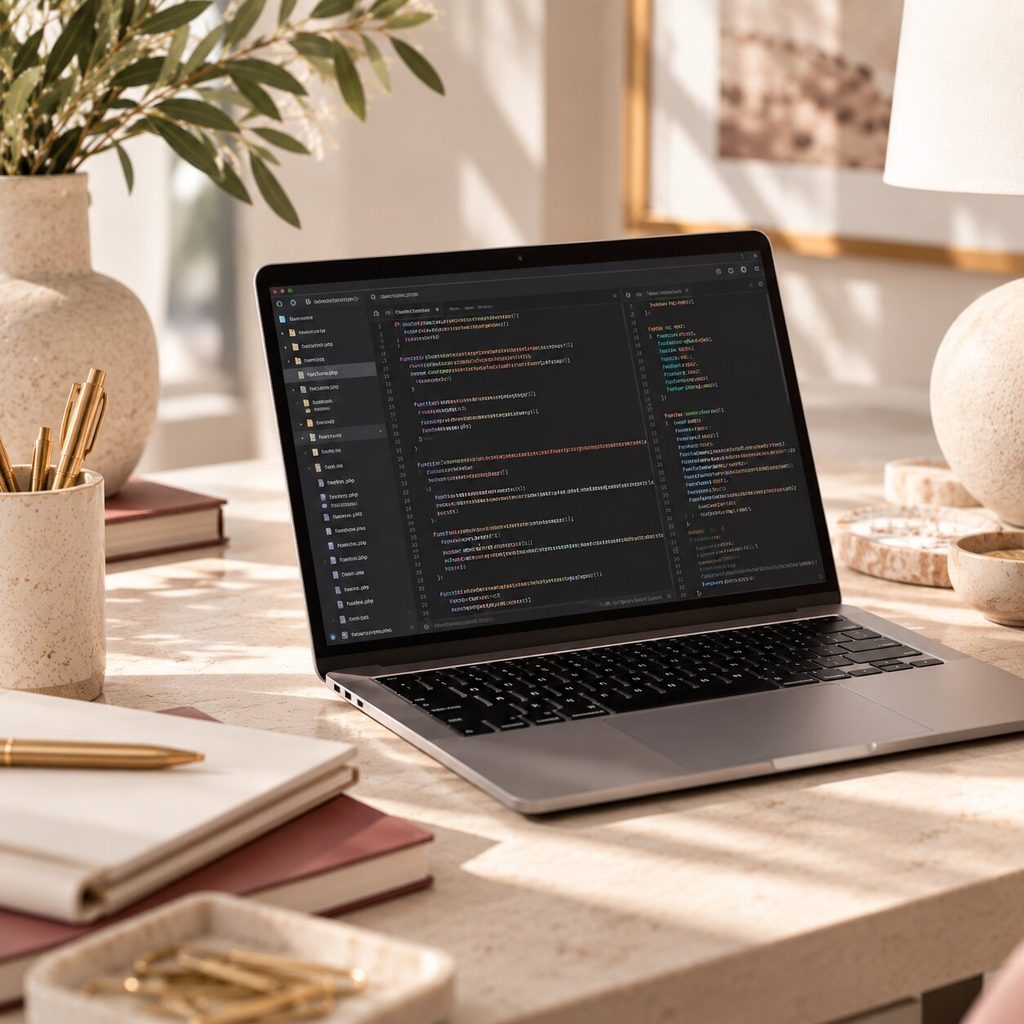
Most AI website tools hand everything back to you as code. Not a friendly editor with a button that says “change this headline.” Just code that looks like a bunch of mess for those not familiar with it.
Hunting for words in a wall of code
So let’s say you want to update one sentence on your About page. Simple, right? Well, now you’re scrolling through hundreds of lines of HTML, squinting at angle brackets, and searching for the exact words you want to change.
Want to swap a photo? Same deal. Want to add a brand new testimonial section? Now you’re trying to figure out where it even goes in the code without breaking everything around it.
Copy, paste, prompt, repeat
Because of that, most people end up in what I call the edit loop:
- Copy the whole page.
- Paste it back into the AI.
- Explain what you want changed.
- Wait for it to spit the page back out.
- Check it, find something it changed that you didn’t ask for, and repeat.
That’s fine once or twice. But a website is never “done.” You’ll update prices, add new offers, swap seasonal images, and tweak your bio a dozen times. As a result, every tiny change becomes a whole conversation with a chatbot, and more and more tokens used.
Multiple Pages Mean Multiple Headaches
Now, let’s level up. A real business website isn’t one page. It’s a home page, an about page, a shop, a contact page, a blog, and maybe a freebie library. And all of those pages link to each other.
That’s where AI websites start to wobble.
Navigation that falls apart
When AI builds each page as its own separate chunk of code, your menu lives on every single page. So if you add a new page, you have to update the menu on all of them. Miss one, and suddenly your shop page has a different menu than your home page.
Meanwhile, links break. Styles drift. One page uses a slightly different shade of pink than the others because the AI “improved” it during your last edit. It’s all small stuff, but it begins to add up fast, your visitors notice, and you’re pulling your hair out trying to fix all the different page files.
Adding a blog? Good luck
Blogging is where this really falls apart. With most AI-built sites, every new blog post is basically a brand new page of code. There’s no simple editor, no categories, and no easy way to schedule posts.
Plus, you lose all the helpful tools that make a blog grow, like SEO plugins, recipe cards, opt-in forms, and related posts. For a blogger, that’s a pretty big deal.
Why So Many AI Websites Look the Same
Okay, this one might ruffle a few feathers. But I’ll say it anyway: AI websites mostly look the same.
You’ve probably noticed it too. The big centered headline. The soft gradient background. Three little feature cards with icons. Eyebrow text after eyebrow text. Rinse and repeat.
That happens because AI learns from patterns. It’s really good at producing the most likely version of a website. However, the most likely version is also the most average version. So when thousands of people ask for “a modern website for my coaching business,” they all get pretty much the same answer.
To be fair, AI is getting better every month, and I fully expect that to keep improving. Still, right now, it’s really hard to get AI to create something that feels unique and unmistakably you. And in a crowded online space, looking like everyone else is a real problem. Your website should make people stop scrolling.
We’re Not Going Back to the MySpace Days
Remember customizing your MySpace profile? Copying random code from some forum, pasting it into a box, and praying your auto-playing song didn’t crash everyone’s browser? Good times. Truly.
But we don’t want to go back there. And honestly, AI websites that only exist as code kind of drag us backward. Suddenly, you need to wrangle code (or wrangle an AI that wrangles code) just to change a photo.
What you actually need from a website
Here’s what most bloggers and business owners really want:
- Edit your content easily, without touching code.
- Swap out images in a couple of clicks.
- Write and publish blog posts whenever inspiration strikes.
- Add a new page without rebuilding your menu by hand.
- Grow over time with opt-ins, a shop, or a course.
None of that is too much to ask. In fact, it’s the bare minimum for a website you’ll actually use.
That’s exactly why WordPress exists
This is why WordPress powers such a huge chunk of the internet. It gives you a real dashboard, a visual editor, and the freedom to update your site whenever you want. You own it, you control it, and you don’t need a chatbot’s permission to fix a typo.
It’s also why I build our themes the way I do. Each one is designed so you can plug in your own content, colors, and photos, and then keep editing on your own. No code hunting required. If you’re just getting started, my guide on how to start a website walks you through the basics.
I Love AI. I Just Don’t Let It Design.
So here’s where I land personally. I use AI for a ton of things in my business. It helps me brainstorm, outline, organize my week, and handle a bunch of behind-the-scenes busywork. I’m a fan.
But design? That’s where I draw the line.
I’m a designer by trade. I taught myself to code and design back when YouTube tutorials were grainy and I was building $25 blog designs. Over the years, I’ve learned that great design comes from tiny human decisions. Things like which font feels warm instead of stiff, how much breathing room a photo needs, and which color makes someone feel at home.
That’s what makes our designs different. Every R316 theme is created by a real human, not generated by AI. As a result, you get a site with personality baked in, and not the same layout everyone else got from the same prompt.
And because themes are a starting point, your site still ends up uniquely yours. Want proof? Peek at our customer showcase and you’ll see just how different the same theme can look in different hands.
The Bottom Line on AI Websites
AI websites aren’t bad. They’re just built for a different job. If you need one quick sales page with a checkout button, AI is a fantastic shortcut.
But if you want a real website, one with multiple pages, a blog, room to grow, and a design that actually feels like you, you’ll want something you can edit easily and own completely. That means WordPress, plus a design made by a human who cares about the details.
So use AI where it shines. Then give your website the foundation it deserves.
Ready for a website you can actually edit (and that doesn’t look like everyone else’s)? Our human-designed WordPress themes give you a beautiful, unique starting point with an easy editor and zero code hunting. Browse the themes and find your favorite →
Ready to turn your ideas into something more?
Our feminine WordPress themes are designed to help you build a beautiful, professional website — whether you’re starting a blog, selling products, or growing a business.